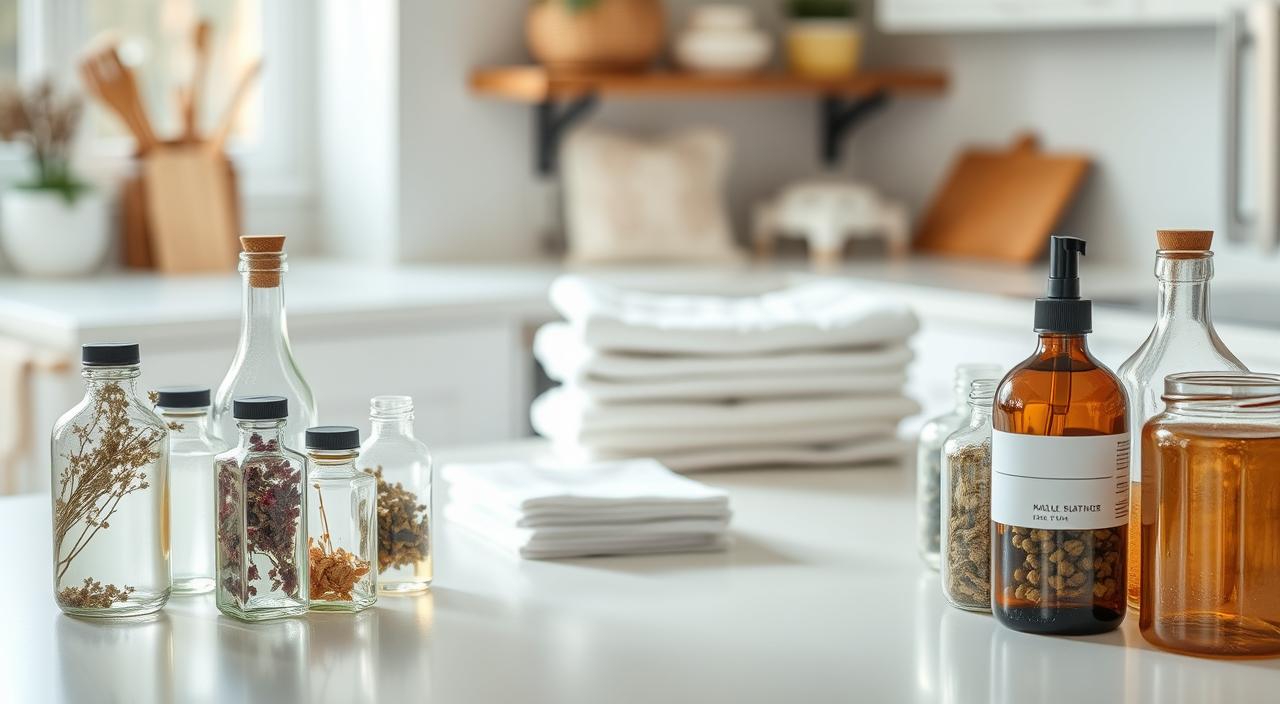
Refreshing your home’s ambiance is easy with a DIY fabric spray. Just use natural ingredients and your favorite essential oils for fabric. It’s simple to make your home smell amazing.
Creating your own aromatic spray recipe lets you choose the scents and ingredients. This means a healthier home for you and your family. It’s perfect for fabrics and upholstery, offering a fresh smell without harsh chemicals.
With a homemade upholstery spray, your furniture and fabrics will always smell great. We’ll show you how to make your own aromatic sprays at home.
You’ll learn how to create a simple DIY fabric spray using natural ingredients and essential oils.
You’ll understand the benefits of making your own aromatic sprays for a healthier home environment.
The Benefits of Homemade Fabric Sprays
Making your own fabric sprays is good for your health, your wallet, and the planet. By doing it yourself, you avoid harsh chemicals found in store-bought products.
Health Advantages Over Commercial Products
Commercial sprays can cause allergies or breathing problems. But, homemade sprays let you pick safe ingredients. This makes them a better choice for your family’s health.
Using eco-friendly fabric sprays means less exposure to harmful toxins.
Cost-Effectiveness of DIY Solutions
DIY fabric sprays are also a smart money move. Buying ingredients in bulk saves you money over time. Plus, you can make them to your liking, changing scents and formulas as you want.
Environmental Impact Considerations
Homemade sprays are also kinder to the Earth. They use natural ingredients and cut down on packaging waste. This makes eco-friendly fabric sprays a greener option.
In summary, homemade fabric sprays are a great choice. They’re healthier, cheaper, and better for the planet. DIY sprays are clearly the better option.
Essential Ingredients for Your DIY Aromatic Spray
A great aromatic spray starts with the right ingredients. To make a spray that works well and smells nice, you need to know what each part does.
Base Liquids: Water, Vodka, and Witch Hazel
The base liquid is key for your spray’s success. You can pick from water, vodka, or witch hazel. Water is good for mixing things, but it can spoil faster. Vodka keeps the spray fresh longer because of its alcohol. Witch hazel makes fabrics look better by reducing wear.
| Base Liquid | Properties | Best Use |
|---|---|---|
| Water | Universal solvent, can lead to quicker spoilage | General use, especially with added preservatives |
| Vodka | Preservative properties due to alcohol content | For longer shelf life and as a disinfectant |
| Witch Hazel | Astringent properties | For reducing fabric wear appearance |
Essential Oils and Their Properties
Essential oils give your spray its smell and health benefits. Lavender calms you, peppermint wakes you up, and tea tree oil fights germs. Pick oils that match what you want your spray to do.
Optional Additives for Enhanced Performance
Natural Preservatives
Adding natural preservatives like vitamin E oil or grapefruit seed extract can make your spray last longer. They stop bacteria and mold from growing.
Fixatives for Longer-Lasting Scents
Fixatives like orris root powder or benzoin resin keep the scent going longer. They slow down how fast the essential oils come out.
Knowing how to mix these ingredients right lets you make a spray that smells amazing and does more for your fabrics and furniture.
Tools and Equipment You’ll Need
To make your own aromatic spray, you’ll need some basic tools and equipment. Having the right supplies makes the process easier and more efficient.
Spray Bottles and Storage Containers
You’ll need spray bottles to keep your aromatic spray. Choose bottles made from glass or high-quality plastic. They should be able to handle the ingredients. Dark glass bottles are best to keep your spray from light damage.
- Glass spray bottles
- Plastic spray bottles
- Dark glass bottles for storage
Measuring Tools and Mixing Equipment
Getting the right measurements is key for your DIY recipe. You’ll need measuring cups and spoons to mix your ingredients right. A small mixing bowl and a stirring utensil, like a spoon or whisk, are also necessary.
Safety Equipment Recommendations
When working with essential oils and other ingredients, safety is important. Wear gloves to avoid skin irritation and goggles to protect your eyes. It’s also wise to work in a well-ventilated area.
Basic Aromatic Spray Recipe for Beginners
If you’re new to DIY aromatic sprays, start with a simple recipe. Making your own sprays lets you choose the ingredients and scents you like.
Step-by-Step Mixing Instructions
To make a basic aromatic spray, follow these steps:
- Prepare your ingredients: Pick your favorite essential oils and a base liquid (water, vodka, or witch hazel).
- Measure your ingredients: Use a measuring cup or spoon to measure the ingredients accurately.
- Mix the ingredients: Mix the essential oils with the base liquid in a bowl or directly in a spray bottle.
- Shake well: Make sure the essential oils are well mixed with the base liquid.
Proper Dilution Ratios
Using the right dilution ratio for essential oils is key. A good rule of thumb is to use 1-3% essential oils. For example, add 1-3ml of essential oils to every 100ml of base liquid.
- 1% dilution: Good for sensitive skin or delicate fabrics.
- 2-3% dilution: Perfect for most uses, offering a nice scent without being too strong.
Testing and Adjusting Your Formula
Test your aromatic spray on a small area first. This ensures it won’t cause any color changes or skin irritation. If needed, tweak the dilution ratio or essential oil mix to get the scent and effect you want.
By following these easy steps and guidelines, you can make your own aromatic sprays just the way you like them.
How to Make an Aromatic Spray for Fabrics and Upholstery at Home
Making an aromatic spray for fabrics and upholstery at home is easy and fun. You just need a few simple ingredients and some basic steps. This way, you can make your home smell nice and fresh.
Comprehensive Process from Start to Finish
To start, you’ll need a base liquid, essential oils, and maybe some extra stuff. First, mix your base liquid with the essential oils in a bowl. Use about 1 cup of base liquid for 10-15 drops of essential oil. You can change this ratio if you like.
After mixing, pour the solution into a spray bottle and shake it up. Now, you can use your spray on fabrics and upholstery in your home.
Customization Options for Different Needs
One great thing about making your own spray is you can make it your own. Try different essential oil mixes for unique smells. Or, add a bit of food coloring to color your spray.
| Customization Option | Description |
|---|---|
| Essential Oil Blends | Mix different essential oils to create unique scents |
| Optional Additives | Add a few drops of food coloring to tint your spray |
Troubleshooting Common Mixing Issues
If your spray doesn’t mix right, like if it separates or clogs, don’t worry. These problems are simple to solve. Just shake the bottle well or tweak the base liquid to essential oil ratio.
By following these easy steps and tips, you can make a lovely, fragrant spray for your home’s fabrics and upholstery.
Popular Essential Oil Combinations for Different Moods
Essential oil blends can change the mood of your home. You can pick blends to relax, boost energy, or refresh your space with seasonal scents.
Relaxing Blends for Bedrooms and Living Spaces
For places where you relax, choose calming blends. A mix of lavender, chamomile, and bergamot can help you sleep better. These oils calm your mind and body, making your space peaceful.
Energizing Scents for Work Areas
In work areas, energizing scents boost productivity. Blends with peppermint, eucalyptus, and rosemary wake up your senses and sharpen focus. These oils refresh and energize your space.
Seasonal Fragrance Combinations
Switching your essential oils with the seasons keeps your home smelling new.
Spring and Summer Fresh Scents
For spring and summer, use blends with citrus oils like lemon and grapefruit and jasmine and rose. These scents make your home bright and airy.
Fall and Winter Cozy Aromas
In fall and winter, warm scents are inviting. Try blends with cinnamon, clove, and pine for a cozy feel, like holiday gatherings.
Try different essential oil blends to match your mood. Whether you want to relax, energize, or refresh, there’s a blend for you.
Specialized Recipes for Different Fabric Types
Not all fabrics are the same, and they need different care. To make the best DIY sprays for different fabric types, you need to know what each fabric needs. We’ll show you how to make sprays that are safe and effective for every fabric.
Delicate Fabrics: Silk and Lace Formulations
When working with silk and lace, you must be gentle. A delicate fabric spray is made with a little essential oil and a base like witch hazel. Use it carefully to avoid harming the fabric.
- Use a small spray bottle to control the amount applied.
- Test the spray on an inconspicuous area first.
- Opt for mild essential oils like lavender or chamomile.
Heavy-Duty Solutions for Upholstery and Carpets
Upholstery and carpets need something stronger. A heavy-duty upholstery spray uses more essential oils and a tough base. Adding fabric protector helps it last longer.
- Choose essential oils with deodorizing properties, like tea tree oil.
- Use a mixture of water and a bit of vodka or witch hazel as the base.
- Shake well before each use to emulsify the ingredients.
Car Interior and Outdoor Fabric Sprays
Car interiors and outdoor fabrics face harsh conditions. They need sprays that protect against the sun and weather. Use UV-protective ingredients and citrus-based oils for a fresh scent.
- Incorporate UV-protective ingredients to prevent fabric degradation.
- Use a waterproofing spray base for enhanced durability.
- Opt for citrus or mint essential oils for their refreshing qualities.
Application Techniques for Best Results
To get the most out of your homemade aromatic sprays, applying them right is key. The right way to apply can greatly affect how well your fabric sprays work.
Proper Spraying Distance and Coverage
When you spray your DIY fabric spray, keep about 6-8 inches away from the fabric. This distance ensures the spray spreads evenly. Make sure to cover the whole area but don’t soak the fabric too much.
Drying Time Considerations
The drying time for your fabric spray depends on the ingredients and the fabric type. Usually, it takes a few minutes for it to dry fully. It’s wise to test a small, hidden spot first to figure out how long it takes to dry.
Frequency of Application Guidelines
How often to reapply your fabric spray varies based on use and personal taste. Generally, you can reapply every 1-2 weeks. But, if your spray is on busy areas or fabrics used a lot, you might need to do it more often.
| Application Frequency | Recommended Use |
|---|---|
| Every 1-2 weeks | General use on fabrics and upholstery |
| Every 3-4 weeks | Less frequently used areas or delicate fabrics |
| As needed | High-traffic areas or fabrics that are frequently used |
Storage and Shelf Life of Your Homemade Sprays
To keep your DIY fabric sprays fresh and effective, it’s key to store them right. Proper storage keeps their strength up and makes them safe to use.
Optimal Container Types and Materials
Dark glass bottles are best to shield your sprays from light. This light can harm the essential oils. Also, make sure the bottles are tightly sealed to avoid leaks and contamination.
Storage Conditions for Maximum Longevity
Keep your sprays in a cool, dry spot, away from sunlight and heat. This keeps the essential oils good and stops bacteria or mold from growing.
Signs Your Spray Has Expired
- Off or sour smell
- Change in color or clarity
- Visible sediment or particles
Replace your spray if you notice any of these signs to keep it working well and safe.
Troubleshooting Common Issues
When you start using your homemade aromatic sprays, you might run into some common problems. But don’t worry, these issues are simple to solve with a bit of knowledge.
Addressing Weak or Fading Scents
If your spray’s scent fades fast, it could be because of the essential oils. Some essential oils evaporate quicker than others. To fix this, add a few drops of a fixative essential oil like sandalwood or vanilla to your mix.
Fixing Staining or Discoloration Problems
Staining or discoloration can happen if the essential oils or other ingredients aren’t mixed right. Make sure you’re using the right mix for your fabric. If staining keeps happening, try using a different essential oil or tweaking your recipe.
Resolving Separation or Clogging in Spray Bottles
Dealing with separation or clogging in spray bottles can be annoying. To fix it, shake the bottle well before each use. If it still happens, check that your ingredients get along and you’re not using too much essential oil.
| Issue | Possible Cause | Solution |
|---|---|---|
| Weak or fading scent | Volatile essential oils | Add fixative essential oils |
| Staining or discoloration | Incorrect dilution ratio | Adjust dilution ratio or change essential oils |
| Separation or clogging | Incompatible ingredients or high essential oil concentration | Shake well before use or adjust recipe |
Conclusion
Making your own aromatic sprays for fabrics and upholstery is a great way to freshen your home. It lets you control the ingredients and scents you use. This approach avoids harsh chemicals found in commercial products.
You can also customize fragrances to your liking. Plus, it’s a cost-effective solution. This makes your home smell amazing and feel personal.
This article showed you how easy it is to make aromatic sprays. You can mix different essential oils to create unique scents. This lets you enhance your living spaces with a personal touch.
Now that you know how to make aromatic sprays, we encourage you to keep exploring DIY home fragrances. Try new recipes and adjust concentrations to your taste. Enjoy the freshness and ambiance your homemade sprays bring to your home.
With these simple recipes and techniques, you can keep your home smelling its best. You’ll also enjoy the benefits of making your own aromatic sprays.

Hi there! My name is Ana Beatriz, I’m from Colorado, and I write this blog with great care during my free time.