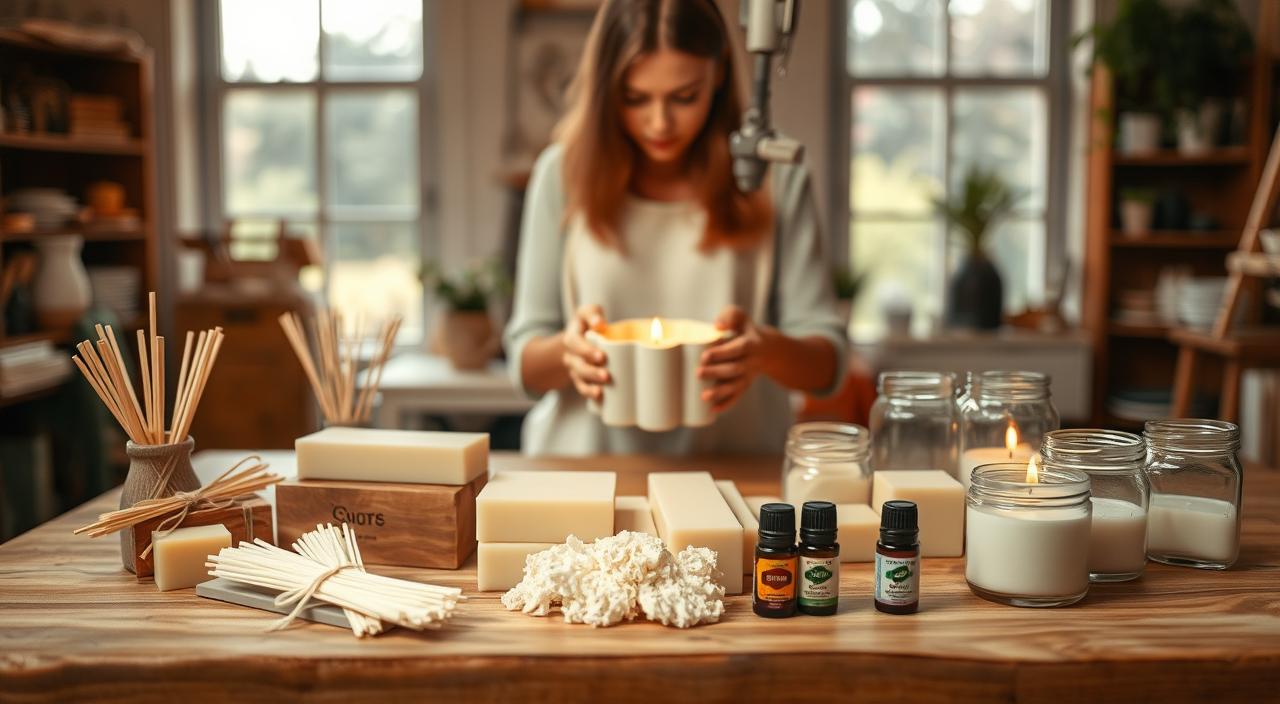
Imagine turning your living space into a peaceful oasis with candles that glow softly. Making homemade candles is a fun hobby that lets you make your space more relaxing. By adding aromatherapy to your candles, you can make your home feel more calming and improve your mood.
In this article, we’ll show you how to make calming candles at home. You’ll learn the joy of candle making and enjoy a peaceful atmosphere. Get ready to relax and create a calm haven in your home.
The Art and Benefits of Homemade Candle Making
Making homemade candles is more than just a hobby. It brings physical and mental health benefits and saves money. You can enjoy the benefits of aromatherapy in a way that’s both personal and affordable.
Physical and Mental Health Benefits of Aromatherapy Candles
Aromatherapy candles can greatly improve your health. They help reduce stress and anxiety, leading to better sleep. Essential oils like lavender and chamomile are especially good for relaxation.
Economic Advantages of DIY Candles
DIY candles are a smart choice for your wallet. Buying materials in bulk and making candles at home saves you money. Plus, they make great, unique gifts.
Environmental Impact of Making Your Own Candles
Homemade candles are better for the planet. You can pick eco-friendly waxes and packaging. This makes your hobby more green.
| Benefits | Description |
|---|---|
| Physical and Mental Health | Aromatherapy candles promote relaxation and reduce stress. |
| Economic Advantages | DIY candles are cost-effective and make personalized gifts. |
| Environmental Impact | Eco-friendly candle making reduces environmental footprint. |
Homemade candles offer many benefits. They help you relax, save money, and live more sustainably. Whether you’re looking to unwind, cut costs, or help the planet, candle making is a fulfilling hobby.
Essential Materials and Equipment You’ll Need
To begin candle-making, you must gather the right stuff. You’ll need to know about wax, wicks, and containers. Also, you’ll need basic tools for the job.
Types of Wax Options for Beginners
Choosing the right wax is key for beginners. You have soy wax, beeswax, and paraffin wax to pick from. Soy wax is eco-friendly and easy to use. Beeswax gives a natural scent. Paraffin wax is versatile for many candle types.
Wicks, Containers, and Holders
Choosing the right wick is crucial for even burning. Cotton and wooden wicks are good choices. You’ll also need a heat-resistant container, like a glass jar or metal tin, with a tight lid.
Basic Tools for Candle Making
You’ll need basic tools to melt and shape your wax. A double boiler or candle-making pot, a thermometer, and a tool for mixing colorants or fragrances are must-haves.
Thermometers and Measuring Tools
A thermometer is key for checking wax temperature. Measuring tools help you mix wax and fragrances accurately.
Double Boilers and Heat Sources
A double boiler is safe for melting wax, offering controlled heat. You can also use a dedicated pot or microwave-safe bowl for melting.
Where to Source Quality Materials
You can find candle-making supplies at craft stores, online, or specialty shops. Choose suppliers known for quality and clear instructions.
Understanding Different Waxes and Their Properties
The world of candle making has many waxes, each with its own traits. Picking the right wax is key for making candles that fit your needs. You might want eco-friendliness, long life, or a certain look.
Soy Wax: The Eco-Friendly Option
Soy wax is a top pick for those who care about the planet. It’s biodegradable, renewable, and burns clean. Soy wax candles also hold fragrance well, perfect for aromatherapy.
Beeswax: Natural and Long-Burning
Beeswax is a natural wax that smells nice and gives a warm glow. It burns long and is used in luxury candles. Beeswax candles are thought to clean the air too.
Paraffin Wax: Traditional and Versatile
Paraffin wax is common in candle making because it’s versatile and cheap. It’s easy to color and scent, making it a favorite. But, it’s not as green as other options.
Coconut and Other Alternative Waxes
Coconut wax is becoming popular for being eco-friendly and having great scent. Other waxes like palm wax and blends offer different qualities. They let candle makers meet specific needs.
Selecting the Perfect Wicks for Your Candles
Choosing the right wick is key. It affects how well your candle burns and melts. Different materials and sizes are available for this purpose.
Cotton vs. Wooden Wicks
Cotton wicks are common and burn consistently. They work well with most wax types. Wooden wicks, however, create a crackling sound like a fireplace. They also produce a larger flame, perfect for certain designs.
Cotton wicks are great for a simple, reliable burn. Wooden wicks add ambiance and are perfect for decorative candles.
Determining the Right Wick Size
The wick size is crucial for your candle’s performance. A too-large wick can burn too hot, causing soot or uneven melting. A too-small wick may not melt the wax well, leading to poor scent throw or tunneling.
To find the right wick size, consider your candle’s diameter and wax type. Manufacturers often provide guidelines based on these factors.
| Candle Diameter | Wick Size | Wax Type |
|---|---|---|
| Small (up to 3 inches) | 6-8 mm | Soy Wax, Paraffin |
| Medium (3-6 inches) | 8-10 mm | Soy Wax, Beeswax |
| Large (over 6 inches) | 10-12 mm | Paraffin, Blended Wax |
Pre-tabbed vs. Non-tabbed Wicks
Pre-tabbed wicks have a base or tab for stability. Non-tabbed wicks need adhesive or another method to stay in place.
Pre-tabbed wicks are easy and save time, ideal for beginners. Non-tabbed wicks offer more flexibility and can be used with various adhesives.
Centering and Securing Your Wick
It’s important to center and secure the wick for even burning. Use a wick tab or adhesive for this. For larger candles, additional support like a wick clip may be needed.
Learn How to Make Homemade Candles with Calming Essences: Step-by-Step Process
To start making your own calming candles, you’ll need to prepare your workspace and gather a few essential materials. This initial step is crucial for a smooth and enjoyable candle-making experience.
Preparing Your Workspace Safely
Before you begin, ensure your workspace is clean, dry, and free from any debris. Cover your work surface with newspaper or a plastic tablecloth to prevent wax spills from damaging your furniture.
Always work in a well-ventilated area to avoid inhaling wax fumes or fragrance oils. Keep a fire extinguisher nearby as a precautionary measure.
Measuring and Melting the Wax
Accurately measure your wax using a digital scale. The type of wax you’re using (soy, beeswax, or paraffin) will determine the melting point and temperature control needed.
Temperature Control Tips
Use a double boiler or a dedicated candle-making pot to melt the wax. Monitor the temperature closely, as overheating can damage the wax.
Avoiding Common Melting Mistakes
Stir the wax regularly to ensure even melting. Avoid using high heat, which can cause the wax to burn or discolor.
Adding Fragrances and Essential Oils
Once the wax is fully melted, you can add your chosen fragrances or essential oils. The amount you add will depend on the strength of the fragrance and your personal preference.
| Fragrance Type | Recommended Amount | Notes |
|---|---|---|
| Essential Oils | 5-10% | Strong, natural scents |
| Fragrance Oils | 10-15% | Variety of scents available |
Pouring Techniques for Perfect Results
Pour the melted wax into your prepared container, making sure to fill it to the top. Use a thermometer to monitor the temperature and avoid overheating.
Curing and Testing Your Candles
Allow your candles to cure for at least 24 hours before burning. This allows the wax to harden fully and the fragrance to settle.
Once cured, test your candle by lighting it and observing the burn. A well-made candle should have a smooth, even burn and a consistent fragrance throw.
Guide to Calming Essential Oils and Their Benefits
Essential oils, especially calming ones, are a natural way to lower stress and relax. You can use them in homemade candles to make your home peaceful.
Lavender: The Ultimate Relaxation Scent
Lavender oil is famous for its calming effects. It can lessen anxiety and improve sleep. Using lavender oil in candles makes your space calm and soothing.
Chamomile: For Stress Relief and Better Sleep
Chamomile essential oil is great for easing stress. It calms nerves and helps you sleep better.
Bergamot and Citrus: Mood-Lifting Properties
Bergamot oil, with its citrusy smell, lifts your mood. It reduces stress and anxiety, making you feel better.
Sandalwood and Cedarwood: Grounding Scents
Sandalwood and cedarwood oils ground you. They bring calm and stability, perfect for evening use.
Creating Custom Blends for Different Moods
Working with essential oils lets you make custom blends for your mood. Mixing oils creates unique scents for relaxation, energy, or focus.
Relaxation Blends for Evening
For a calming evening blend, mix lavender, chamomile, and sandalwood oils. This blend relaxes you and prepares you for sleep.
Energizing Blends for Morning
To energize your morning, blend bergamot, citrus, and a bit of peppermint. This mix boosts energy and sets a positive day tone.
Exploring different essential oils and blends helps you find the perfect scents. They enhance your well-being and create a peaceful living space.
Troubleshooting Common Candle Making Problems
Even with great effort, you might face common candle making issues. But, there are solutions. Candle making is an art that needs patience and practice. Troubleshooting is a key part of this process.
Fixing Sinkholes and Uneven Surfaces
Sinkholes and uneven surfaces often come from wrong wax temperature or small wick size. To solve this, heat your wax right and maybe use a bigger wick or pour differently.
- Check your wax temperature before pouring.
- Use a thermometer to ensure accuracy.
- Adjust your wick size according to the manufacturer’s guidelines.
Addressing Tunneling Issues
Tunneling happens when the wick doesn’t melt wax evenly. This creates a tunnel. To fix it, try a bigger wick or adjust the size based on the candle’s diameter.
Tips to prevent tunneling:
- Use the correct wick size for your candle diameter.
- Ensure the wick is centered and straight.
- Burn your candle long enough to melt the wax near the edges.
Solutions for Poor Scent Throw
Poor scent throw might be from too little fragrance or the wrong wax. To boost scent throw, use the right amount of fragrance for your wax. Also, try different wax or fragrance known for strong scent.
Dealing with Discoloration
Discoloration can be from the wax type or heat and light. To lessen discoloration, pick wax less likely to discolor. Also, keep candles away from direct sunlight and heat.
Creative Decorative Techniques for Unique Candles
Take your candle-making to the next level with creative techniques. These methods can turn your candles into personalized pieces that show off your style and creativity.
Layering Colors and Scents
Layering colors and scents is a simple way to make your candles stand out. Pour different wax colors into the mold, letting each layer cool before adding the next. You can get a marbled look or distinct layers. Try different fragrances to create unique scents that make any room feel special.
Adding Dried Flowers and Herbs
Dried flowers and herbs add beauty and fragrance to your candles. Just put them in the melted wax or on top of the candle before it hardens. Lavender buds, rose petals, and chamomile flowers are great choices. This method gives your candles a natural, beautiful look, perfect for gifts or decoration.
Creating Textured and Marbled Effects
Textured and marbled candles look sophisticated. Use tools to shape the wax while it cools for texture. Swirl different wax colors for a marbled look. These methods help you make candles that catch the eye.
Embedding Objects for Visual Interest
Embedding objects in your candles adds visual appeal. You can use shells, beads, or tiny figurines. This not only makes your candles interesting but also personalizes them for special occasions or gifts.
Try these techniques to make candles that are truly unique. They’re perfect for personal use or as gifts, adding that special touch.
Packaging and Gifting Your Homemade Candles
After making your homemade candles, it’s time to package them nicely. This makes them perfect for gifting or keeping for yourself. The way you wrap your candles can make the experience even better.
Eco-Friendly Packaging Ideas
Choosing eco-friendly packaging is good for the planet and adds a special touch to your gift. You can use recycled materials, biodegradable wraps, or reusable containers. Think about using old jars, paper pulp, or fabric wraps.
Creating Custom Labels and Tags
Custom labels and tags make your gift unique. You can make your own using cardstock or stickers. Include the candle’s scent, your name, and care tips. This adds a personal and professional touch.
Storage Tips for Maintaining Scent and Quality
To keep your candles smelling great and in good shape, store them in a cool, dry spot. Keep them away from sunlight. This way, your candles will stay fresh until you light them.
Presentation Ideas for Special Occasions
For special events, add a decorative touch to your candles. You can wrap them in fancy paper, add a ribbon, or put them in a box. A themed gift basket with matching items can also make the gift more special.
| Packaging Idea | Description | Occasion |
|---|---|---|
| Eco-friendly Wrap | Biodegradable wrap made from recycled paper | Earth Day, Eco-conscious gifting |
| Custom Labels | Personalized labels with candle details | Weddings, Corporate Gifting |
| Gift Boxes | Decorative boxes with cushioning | Birthdays, Holidays |
By carefully packaging your homemade candles, you create a memorable gift. It shows your care and creativity.
Conclusion: Enjoying Your Handcrafted Aromatic Creations
Now that you’ve learned how to make homemade candles with calming essences, it’s time to enjoy the fruits of your labor. Your handcrafted candles are not just a source of warm, soft light. They also help create a peaceful atmosphere in your home.
The aromatic creations you’ve made can help you relax, reduce stress, and improve your overall well-being. As you continue to explore candle making, you’ll find new ways to customize your candles. Try different essential oils, wax colors, and fragrances to create unique candles that reflect your personality.
Whether you’re making candles for personal use or as gifts, the joy of creating something with your own hands is rewarding. So, keep melting, pouring, and enjoying your homemade candles.

Hi there! My name is Ana Beatriz, I’m from Colorado, and I write this blog with great care during my free time.