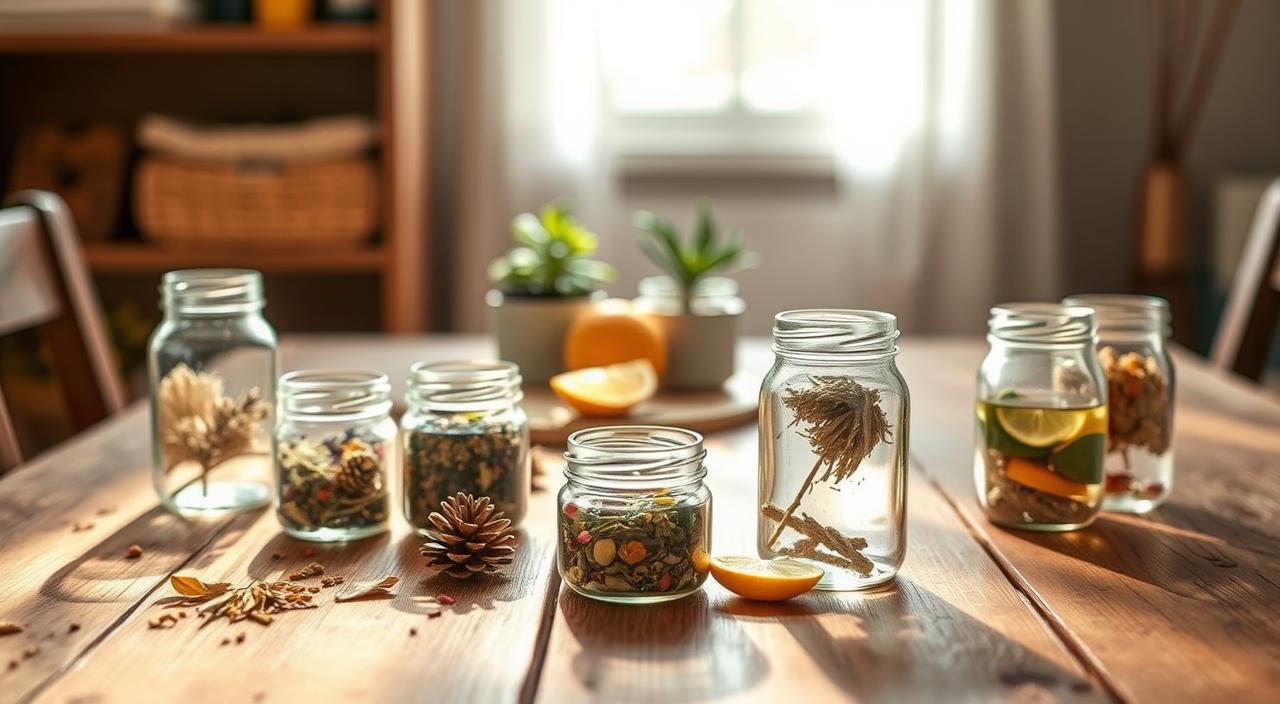
You can make your home smell great with natural air fresheners and essential oils. This method avoids harsh chemicals found in store-bought products. Plus, you can pick the scents you like best.
Creating your own DIY air fresheners means you choose what goes into them. This ensures they’re safe for you and your family. Follow this guide to make your own, and enjoy a home that smells fresh and clean.
Learn how essential oils can make your air fresheners better. Start making your home smell amazing today.
The Benefits of Natural Air Fresheners
Natural air fresheners have many benefits. They improve health and are good for the environment. Making your own air fresheners at home is healthier, more eco-friendly, and saves money.
Health Advantages Over Commercial Products
Commercial air fresheners can cause allergies and breathing problems. But, homemade air fresheners using natural oils are safer. They let you pick the ingredients for a healthier home.
Environmental Impact Considerations
Natural air fresheners are better for the planet. They don’t come in harmful packaging like commercial ones do. Plus, they use ingredients that don’t pollute.
Cost-Effectiveness of DIY Solutions
DIY air fresheners are also cost-effective. You can make them with essential oils, water, and baking soda. This way, you save money and can make them just how you like.
Essential Supplies for Making Natural Air Fresheners
Making your own natural air fresheners is easy with simple supplies. You’ll need a few basic items to create fresh, fragrant products for your home.
Basic Equipment Needed
To start, you’ll need essential oils, a carrier or base, and a container. You might also need droppers, measuring cups, and stirring utensils for crafting.
Where to Source Quality Ingredients
Find quality essential oils at health food stores, specialty cooking stores, or online. Look for purity and concentration for the best results.
Budget-Friendly Alternatives
Creating natural air fresheners doesn’t have to cost a lot. Use old jars or bottles for containers. Look for sales or discounts on essential oils and supplies.
Being smart and resourceful can help you enjoy DIY air fresheners without spending a lot.
Understanding Essential Oils for Air Fresheners
The world of essential oils is vast and varied. It offers many options for natural home fragrances. Essential oils are highly concentrated plant extracts. They capture the essence and fragrance of their source material.
Popular Scents and Their Properties
Different essential oils have unique properties and fragrances. Lavender oil is calming, while citrus oils like lemon and orange are uplifting and refreshing. Knowing these properties helps you pick the right oils for your air freshener recipes.
Therapeutic Benefits of Different Oils
Essential oils do more than smell good; they also offer health benefits. For example, eucalyptus oil can help with respiratory issues. Tea tree oil has antimicrobial properties. Using these oils in your air fresheners can improve your well-being.
Seasonal Oil Selections
Choosing essential oils based on the season can make your home atmosphere harmonious all year.
Spring and Summer Fragrances
For spring and summer, choose light, refreshing scents like lemon, geranium, and rose. These oils bring the freshness of the season and uplift your mood.
Fall and Winter Comfort Scents
In fall and winter, go for warmer, cozier scents like cinnamon, clove, and pine. These oils create a comforting ambiance, ideal for the colder months.
By understanding and using essential oils well, you can make natural home fragrances. These fragrances not only smell wonderful but also make your living space healthier and more inviting.
How to Make Air Fresheners with Natural Oils: Spray Versions
You can make your own natural air freshener sprays with essential oils and basic supplies. This way, you can pick your scent and avoid harsh chemicals in commercial products.
Basic Water and Oil Spray Recipe
A simple recipe for a natural air freshener spray mixes water with essential oils. You’ll need a clean spray bottle, distilled water, and your favorite essential oils.
- Fill the spray bottle with 1 cup of distilled water.
- Add 10-15 drops of your chosen essential oil.
- Shake well before each use to emulsify the oils.
Alcohol-Based Spray Formulas
Alcohol can preserve the spray and make the essential oils spread better. But, make sure the area is well-ventilated when using.
| Ingredient | Quantity |
|---|---|
| Alcohol (e.g., vodka or perfumer’s alcohol) | 1/4 cup |
| Distilled water | 3/4 cup |
| Essential oils | 15-20 drops |
Vinegar-Based Deodorizing Sprays
For a deodorizing spray, use apple cider vinegar. It’s known for its natural deodorizing properties.
Mix 1/2 cup of apple cider vinegar with 1 cup of water and 10 drops of your preferred essential oil.
Preserving Your Spray Fresheners
To keep your spray fresheners fresh, store them in a cool, dark place. Avoid heat or direct sunlight.
By following these recipes and tips, you can enjoy your homemade air fresheners. Your home will smell fresh and fragrant.
Creating Reed Diffusers at Home
Want to add a stylish touch to your home? Making your own reed diffusers is a great idea. They’re easy to make and need little upkeep.
Materials Needed
To start, gather a few basic items. You’ll need:
- A glass container or vase
- Reed diffuser sticks
- Essential oils of your choice
- A carrier oil (such as fractionated coconut oil)
Step-by-Step Assembly Process
Making your reed diffuser is easy. First, mix essential oils with a carrier oil in the glass container. Use about 10-15% essential oils and 85-90% carrier oil. Then, add the reed diffuser sticks to the container, making sure they soak up the oil.
The reeds will slowly release the fragrance, giving your space a soft, consistent scent.
Maintenance and Refilling Tips
To keep your diffuser working well, flip the reeds every few days. Also, refill the container with oil mixture as needed, usually every 2-3 weeks. This keeps your home smelling great with your homemade air fresheners.
By following these simple steps, you can enjoy natural fragrances in your home. You’ll avoid harsh chemicals found in many commercial air fresheners.
Solid Air Fresheners and Wax Melts
You can make solid air fresheners and wax melts with basic supplies. They make your home smell great. These items last a long time and are pleasant to use.
Beeswax and Soy Wax Options
You can choose between beeswax and soy wax for your air fresheners. Beeswax is natural and eco-friendly, offering a nice scent. Soy wax is vegan-friendly and biodegradable. Both are good for homemade air fresheners without harsh chemicals.
Molds and Container Ideas
You can pick the shape and container of your air fresheners to match your decor. Use silicone molds for fun shapes or glass for a rustic look. Decorative tins or jars can add a personal touch.
Adding Natural Colorants
To make your air fresheners colorful, use natural dyes or essential oils. This makes them look good and keeps them chemical-free.
Embedding Dried Flowers and Herbs
Adding dried flowers and herbs makes your air fresheners look elegant. It also boosts their natural scent.
With these steps and natural ingredients, you can make air fresheners that keep your home smelling nice.
Natural Ingredients to Enhance Your Air Fresheners
To make your DIY air fresheners even better, try adding natural ingredients. These can make your home smell amazing and feel welcoming. Mixing these with essential oils creates scents that are both complex and inviting.
Dried Herbs and Flowers
Dried herbs and flowers add a soft, natural smell to your air fresheners. Some great choices include:
- Lavender buds for a calming scent
- Rose petals for a romantic aroma
- Chamomile flowers for a soothing atmosphere
You can mix these into your air freshener blends or make a fragrant potpourri.
Citrus Peels and Fruit Elements
Citrus peels, like lemon or orange, bring a bright, uplifting smell. Just dry the peels and add them to your blends. You can also use dried fruit slices or fruit extracts for unique scents.
Spices and Botanical Additions
Spices like cinnamon, cloves, and nutmeg add warmth and depth. Botanicals like eucalyptus or rosemary offer refreshing scents. Try different mixes to find the perfect smell for your home.
Room Spritzers for Instant Freshness
Homemade room spritzers are a fantastic way to get rid of bad smells and make your home smell nice. With a few easy ingredients, you can make sprays for different rooms and needs.
Quick-Mix Recipes for Different Rooms
You can make room spritzers for each room’s unique needs. For example, a mix of lemon and lavender is great for the living room. A chamomile spray is better for the bedroom.
Fabric-Safe Formulations
It’s key to make sure your spritzers won’t harm fabrics. Use soft, natural ingredients to protect your furniture and curtains. Adding a fabric-safe essential oil like chamomile or geranium is a good idea.
Car and Travel Spritzers
Room spritzers aren’t just for home; they’re also great for cars and travel. A small spray with peppermint or eucalyptus oil can keep your car or hotel room smelling fresh on long trips.
By making your own room spritzers, you control what goes into them. This means no harsh chemicals or fake smells. It’s better for your health and helps the planet too.
Creating Custom Scent Blends
Making your own scent blends is like painting with smells. You can mix essential oils to make fragrances that match your mood or the season. It’s a way to make your space feel just right.
Principles of Scent Layering
Scent layering is about mixing oils to make interesting smells. You need to balance three parts: top, middle, and base notes. Top notes are the first smell you notice, middle notes add depth, and base notes last the longest.
Top notes are usually citrusy and bright. Middle notes are floral or spicy. Base notes are deep and woody, adding warmth to the mix.
Seasonal Blend Recommendations
Seasonal scents can make your home feel special all year. In spring, try lemon, lavender, and geranium. For summer, go for citrus and mint. Autumn is for warm scents like cinnamon and clove. Winter is the time for cozy smells like pine and cedarwood.
Mood-Enhancing Combinations
You can make blends to match your mood. For feeling calm and sleepy, use relaxing scents. For more energy and focus, choose invigorating blends.
Relaxation and Sleep Blends
For a calm night, mix lavender, chamomile, and bergamot. These scents help you relax and sleep better. They make your space feel peaceful.
Energy and Focus Formulas
Need a boost? Try peppermint, eucalyptus, and rosemary. These scents wake you up and help you focus. They clear your mind and fight off tiredness.
| Mood | Essential Oil Blend | Benefits |
|---|---|---|
| Relaxation | Lavender, Chamomile, Bergamot | Promotes calmness, reduces stress |
| Energy | Peppermint, Eucalyptus, Rosemary | Invigorates, enhances focus |
Learning about scent layering and trying out different blends can change your home’s feel. You can make scents that match your mood and make your space more welcoming.
Safety Considerations When Working with Essential Oils
Essential oils are great, but you need to handle them safely. This is to protect yourself and others. It’s important to know the risks and take steps to avoid them.
Proper Handling and Storage
When using essential oils, follow some key steps. Store them in dark glass bottles, away from sunlight and heat. Make sure the bottles are sealed tight and out of kids’ and pets’ reach.
Oils to Avoid Around Pets and Children
Some essential oils can harm pets and kids. For example, peppermint oil and tea tree oil are toxic to cats and dogs. Always check if an oil is safe before using it.
Allergies and Sensitivities
Essential oils can cause allergic reactions or sensitivities. Do a patch test before using a new oil. If you get any irritation, stop using it.
Dilution Guidelines for Safety
Diluting essential oils is key to safe use. For air fresheners, use 1-3% essential oil to carrier. Always check the right dilution ratio for each oil.
By following these safety tips, you can safely use essential oils in your homemade air fresheners. This way, you and those around you stay safe and healthy.
Conclusion
Now you know how to make air fresheners with natural oils. You can create your own scents for a fresher home. DIY air fresheners avoid harsh chemicals and let you choose your home’s smell.
Try out different recipes and essential oils to make your home smell great. You can make sprays, reed diffusers, or solid air fresheners. It’s fun and rewarding.
Keep making your own air fresheners and enjoy a home that smells wonderful. Say goodbye to synthetic fragrances. Start making your home fresher and more inviting today.

Hi there! My name is Ana Beatriz, I’m from Colorado, and I write this blog with great care during my free time.